
How to Read an Albanian Menu
From fli and tavë to qebapa and mazë
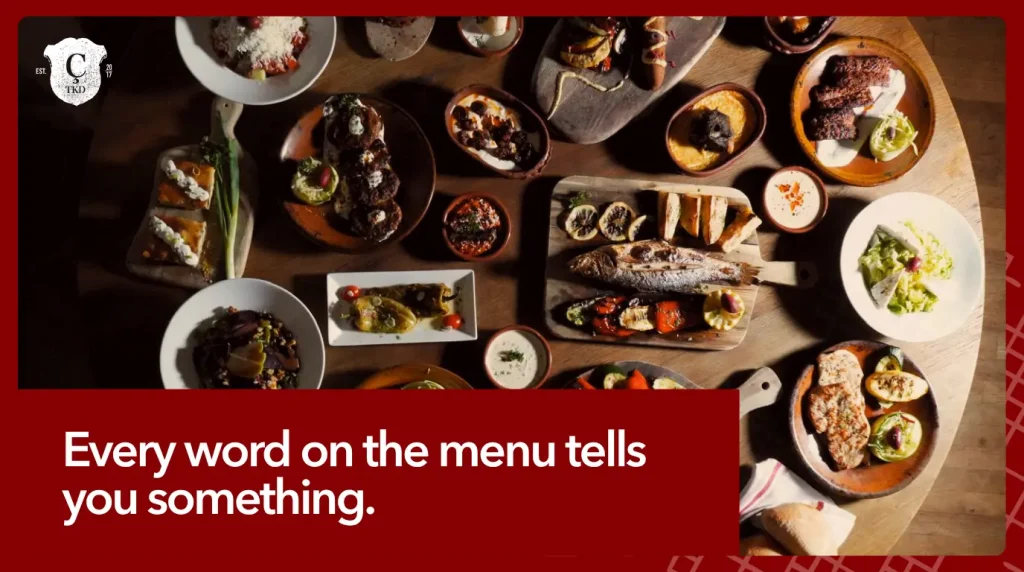
For someone entering an Albanian restaurant for the first time, the names on the menu may be unfamiliar.
Words such as fli, tavë, qebapa and mazë do not always have simple English equivalents. Some describe a specific dish, while others refer to a preparation method, an ingredient or an entire category of food.
Understanding these words can make it easier to see how the menu is organized and what to expect from each dish. More importantly, the original names preserve something that can quietly disappear in translation: the connection between the food, its preparation and the communities that shaped it.
Here is a guide to some of the Albanian and regional food terms you will find on the Çka Ka Qëllu menu.
A short note on Albanian pronunciation
Albanian spelling is generally consistent, meaning words are usually pronounced as they are written once a few important letters are understood.
The letter “ë” often sounds similar to the soft “uh” at the end of an English word such as “sofa.” The letter “ç” is pronounced like “ch,” while “xh” sounds like the English “j.” The Albanian letter “q” has no perfect English equivalent. It is a softer sound than the “ch” in English, although a gentle “ch” is a reasonable approximation for someone encountering the word for the first time.
Pronunciation can also vary slightly between regions and dialects. The guides below are therefore approximate rather than strict phonetic instructions, and that is perfectly fine.
Brumat: savory dishes made from dough and grain
On the Çka Ka Qëllu menu, brumat identifies a group of savory dishes based largely on dough, batter, cornmeal and cheese. The word is connected to brumë, the Albanian word for dough. However, the category includes more than what English speakers might consider bread or pastry. It brings together dishes such as fli, mantia and leçenik, each created through a very different technique.
These dishes demonstrate the importance of flour, grain and dairy in Albanian and Kosovan cooking. They may appear simple from their ingredients, but their preparation can involve layering, shaping, filling or slow baking, and the result is always worth the time.
Fli (“flee”)
Delicate layers of batter baked gradually and brushed with butter. Soft inside, lightly golden at the edges. Shared at the table with yoghurt, cheese or peppers.
Mantia (“mahn-TEE-ah”)
Small baked dumplings filled with seasoned ground veal, served with traditional yoghurt. Crisp outside, tender inside, cool on top.
Leçenik (“leh-cheh-NEEK”)
Savory cornbread from Kosovo and northern Albania, prepared with spinach and three cheeses, served with pepper sauce.
Tavë: both the vessel and the dish
Tavë, approximately “TAH-vuh,” refers to a baking vessel or casserole dish. The same word is also used for foods prepared and served in that vessel. This means tavë is not one individual recipe. It describes a broader style of cooking in which ingredients are combined and baked, often until the surface becomes golden and the flavors have developed together.
The words following tavë help identify what separates one preparation from another. Tavë kosi combines lamb with a yoghurt-and-egg mixture, with kos meaning yoghurt. Tavë dheut combines liver, peppers, tomatoes, cheese and spices in a richer, deeper dish. When a menu has an entire tavë section, you can expect warm, substantial dishes brought to the table in the very vessels in which they were baked.
Mazë and kajmak
Mazë, approximately “MAH-zuh,” is a rich dairy preparation used especially in Kosovo and northern Albanian cooking. Its precise form can vary. Depending on the dish and region, it may resemble thick cream, clotted cream or a mixture of dairy and cheese. At Çka Ka Qëllu, mazë appears in dishes such as specë në mazë, where a fire-grilled pepper is combined with butter and cream cheese, and mazë e zier, a smooth preparation of cornmeal, butter and cheeses.
Kajmak, pronounced approximately “KAI-mahk,” is another rich dairy product found throughout the Balkans. Creamy and slightly tangy, it is commonly served with grilled meats, bread or warm savory dishes. Although mazë and kajmak can occupy similar places on the table, they are not always interchangeable. Recipes, textures and local usage differ, and that difference is part of what makes each one worth trying.
Qebapa, qofte and suxhuk
These three names are often grouped within the grill section, but they describe different preparations with their own texture, seasoning and character.
Qebapa (“cheh-BAH-pah”)
Small, skinless portions of seasoned ground meat cooked over flame. Served with kajmak, cabbage salad, bread or ajvar.
Qofte (“CHOF-teh”)
Seasoned meatballs or patties, distinct from qebapa in shape, texture and seasoning. Each version has its own balance of spice and meat.
Suxhuk (“soo-JOOK”)
A seasoned sausage with a deeper, more pronounced flavor than qebapa or qofte. Grilled or used in baked dishes such as suxhuk në tavë.
Learning through the original names
Translating fli as layered batter, tavë as casserole or qebapa as grilled meat may help explain what arrives at the table. But those descriptions never communicate the whole dish.
The original words carry information about technique, region and tradition. They also remind us that Albanian and Kosovan foods do not need to be renamed to become understandable.
A first visit to an Albanian restaurant does not require knowing every term in advance. Curiosity is enough. Ask what a word means, try dishes with different preparations and allow the meal to introduce the vocabulary naturally. By the end, terms such as fli, tavë and qebapa will no longer feel unfamiliar. They will describe specific textures, aromas and flavors, and dishes that need no English substitute.
The full menu is waiting for you at Çka Ka Qëllu in the Bronx, Manhattan, Stamford or Westwood. Come with questions. Leave with favorites.