

Monthly Blog · 2026
From the Pepper Harvest to Ajvar
How roasted peppers become one of the most recognizable flavors of the Albanian table
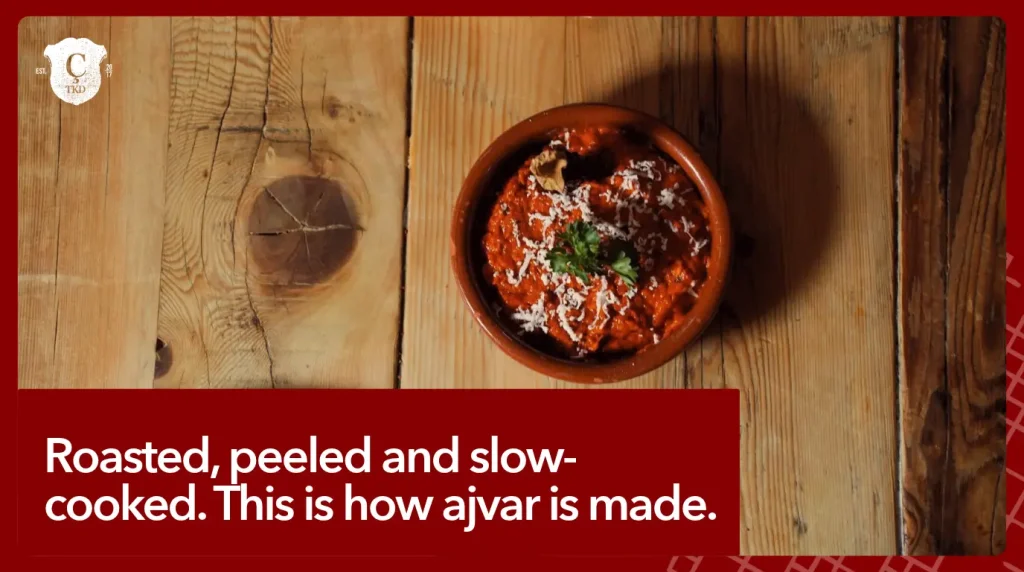
Before ajvar reaches the table, there are peppers to select, roast, peel, drain and cook.
The finished spread may appear simple, but preparing it traditionally requires time and considerable work. That process begins toward the end of summer and the start of autumn, when red peppers reach their fullest color and flavor.
Across Albania, Kosovo and the wider Balkans, this period has long been associated with preserving seasonal produce. Vegetables gathered when they are abundant are transformed into foods that can remain part of the household table through the colder months. Ajvar is one of the most recognizable and beloved results of that work.
What is ajvar?
Ajvar is a thick spread made primarily from roasted red peppers. Depending on the region and family recipe, it may also include eggplant, garlic, oil, salt, vinegar or hot peppers.
Its texture can range from relatively smooth to noticeably coarse. Some versions are mild and sweet, allowing the flavor of the peppers to remain at the center. Others are smoky, tangy or spicy.
There is no single recipe that represents every household. The amount of eggplant, the choice of pepper, the cooking time and even the preferred texture can all vary considerably. What the different versions share is the transformation of fresh peppers through roasting and slow cooking. Water is gradually removed, the flavor becomes more concentrated and the vegetables develop a deep, almost creamy consistency without losing their identity.
The work begins with the peppers
Good ajvar depends first on good peppers.
The peppers selected for traditional preparation are usually ripe, red and fleshy. A pepper with substantial flesh produces more usable pulp and develops a fuller flavor when roasted. Because a large quantity of raw peppers is reduced into a much smaller amount of finished ajvar, households often begin with bags or crates rather than a few individual peppers. What appears to be an abundant harvest can become only a limited number of jars.
Roasting, peeling and draining
The first major step is roasting. Peppers are placed over intense heat until their skins darken and blister. This softens the flesh and gives it a deeper, lightly smoky flavor. The peppers must be turned so that they cook evenly without losing more flesh than necessary.
Once roasted, they are covered or placed in a closed container. The trapped steam loosens the skins, making the peppers easier to peel. Peeling is careful, patient work. The charred skin, stems and seeds must be removed while preserving as much of the cooked pepper as possible. For large batches, this stage alone can take hours.
The peeled peppers are then left to drain. Removing excess liquid is essential because ajvar should be concentrated rather than watery. Some recipes allow the peppers to drain for several hours or overnight before they are ground or finely chopped. Eggplant, when included, goes through the same process: roasted, peeled and drained before being combined with the peppers.
The slow transformation
After the vegetables have been prepared, the mixture is cooked slowly. The peppers are stirred with oil and seasonings until the remaining moisture evaporates and the texture thickens. This stage requires close attention. Ajvar can catch at the bottom of the pot if it is not stirred regularly, particularly as it becomes denser.
The change happens gradually. At first, the mixture still resembles chopped roasted vegetables. As it cooks, the flavors combine and the texture becomes richer and more unified. Families often judge readiness through experience rather than an exact cooking time, when the oil and pepper mixture has finally reached the right consistency and a spoon drawn across the pot leaves a clean path behind it.
The hot ajvar is then placed in clean jars and sealed for storage. The objective is to preserve the peppers safely while holding on to the full flavor of the harvest.
A recipe without a single owner
Ajvar belongs to the shared culinary landscape of the Balkans. Several countries and communities regard it as an important part of their food culture, and debates about its precise origin can become more political than useful. Traditional dishes rarely follow the borders drawn on a modern map.
Recipes move through families, markets, marriages and migration. They change according to available produce and local preferences. In Albanian and Kosovan households, ajvar has become a deeply familiar part of the table. Some families make it entirely from red peppers. Others add eggplant, garlic or hot peppers. The result may be finely processed or deliberately rustic.
These differences do not make one household’s ajvar less traditional than another. They show how food remains alive: recognizable across a region, yet personal in every kitchen.
More than a condiment
Calling ajvar a condiment is accurate, but incomplete.
It can be spread on warm bread, served beside cheese or placed among the first small plates of a meal. It accompanies grilled meats particularly well, bringing sweetness and acidity to the smoky, savory flavors from the grill. Ajvar may also be eaten with pastries, vegetables or simple household meals, adding depth without overwhelming the other food on the plate.
Its versatility is one reason it remains present throughout the year. A jar prepared during pepper season can become part of breakfasts, lunches, dinners and shared tables long after the harvest has ended. Ajvar does not require an elaborate presentation. Bread, cheese and a small plate are enough.
Preservation as culinary knowledge
Before produce could be purchased in every season, preservation was an essential part of managing a household. Peppers were roasted, vegetables were pickled, fruit became preserves and other ingredients were dried or stored. This work extended the harvest and created variety during the winter.
The methods required practical knowledge that could only be learned by doing: understanding when produce was ready, how much moisture had to be removed, how food should be stored. That knowledge passed from one generation to the next through participation and observation, not instructions written down.
Ajvar carries this history within it. Its preparation reflects a way of cooking that pays attention to the agricultural calendar and respects the limited season of an ingredient. Even when ajvar is now purchased or prepared in a restaurant kitchen, its identity remains connected to that earlier rhythm: peppers ripening, families working together and jars being set aside for the months ahead.
Ajvar at Çka Ka Qëllu
At Çka Ka Qëllu, ajvar is prepared as a roasted red pepper spread with eggplant and garlic. It can begin a meal alongside bread, cheese, roasted peppers, tarator and other small plates, or provide a natural accompaniment to qebapa, qofte, suxhuk and selections from the grill.
For guests unfamiliar with Albanian and Kosovan food, ajvar offers a warm and accessible introduction. Its ingredients are recognizable, but the preparation produces something more concentrated and distinctive than a simple pepper dip.
For those who grew up with it, the flavor may recall an entire season of work: the smell of roasting peppers, the table used for peeling and the jars lined up and ready for winter. That is what gives ajvar its lasting place in the cuisine. It preserves more than peppers. It preserves the knowledge, time and care that went into making it.
Find ajvar on the table at Çka Ka Qëllu in the Bronx, Manhattan, Stamford or Westwood.